
MAPPING BRIEFING 05
3D Mapping for Municipalities
Accurate 3D Mapping for Smarter, Safer Cities.
Enhance municipal infrastructure management with high-precision LiDAR mapping solutions for roads, bridges, and utilities.
5G
Real-Time Transfer
MM
Level Precision
3D
Digital Twins
AI
Driven Analytics
Accurate 3D Mapping for Smarter, Safer Cities
Features
Comprehensive 3D Spatial Data Collection
Capture highly detailed topographical and structural data in real time.
Optimized City Planning
3D Mapping with digital twin platform enhances long-term urban development strategies.
Faster & Cost-Effective Surveys
Reduce reliance on time-consuming fieldwork and manual inspections.
Improved Public Safety & Disaster Resilience
Leverage real-time geospatial data for emergency response and infrastructure risk assessment.
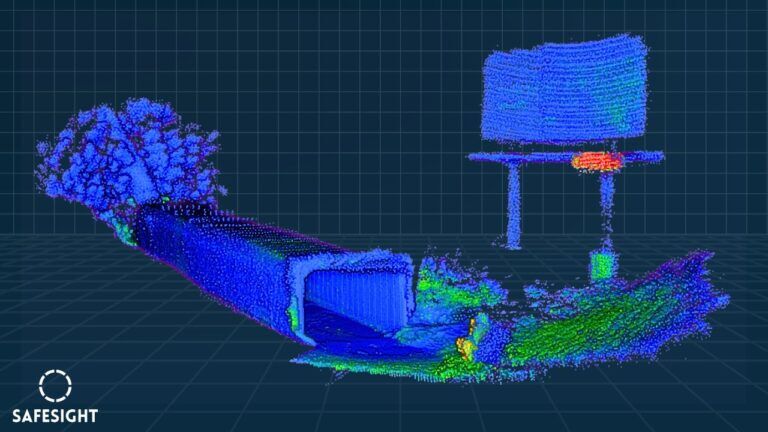
Why Municipalities Need LiDAR Mapping?
Traditional mapping methods are outdated and inefficient. LiDAR technology provides precise, real-time spatial data to modernize municipal planning.
Outdated or incomplete municipal maps
High costs and time-consuming manual surveys
Lack of real-time infrastructure data
SafeSight’s LiDAR
Mapping CapabilitiesHigh-Resolution LiDAR Mapping for Streets, Utilities, and Urban PlanningHigh-Resolution 3D Scanning
Detect surface and subsurface assets with precision
AI-Powered Data Processing
Automated analysis for infrastructure assessment
5G-Enabled Real-Time Mapping
Instant access to high-definition spatial data
Scalable for Cities of All Sizes
From small towns to metropolitan areas
Featured In
Trusted and Featured in Famous Publications











FAQ
Know More About 3D Mapping for Municipalities
How accurate is SafeSight’s LiDAR mapping technology?SafeSight’s high-resolution 3D LiDAR mapping captures geospatial data with millimeter-level precision, ensuring municipalities receive the most accurate and reliable infrastructure assessments.
Can SafeSight’s LiDAR mapping integrate with our existing GIS system?Yes! Our LiDAR solutions are fully compatible with existing GIS, CAD, and digital twin platforms, making it easy for municipalities to incorporate real-time mapping data into their asset management workflows.
What types of municipal infrastructure can be mapped using LiDAR?SafeSight’s LiDAR technology can map roads, highways, bridges, tunnels, storm drains, culverts, rail corridors, subways, and underground utilities, providing a comprehensive view of a city’s infrastructure.
How does 5G-enabled real-time mapping benefit municipalities?Our 5G-powered LiDAR system enables instant data transmission, allowing municipalities to access high-resolution geospatial data in real time. This enhances proactive infrastructure maintenance, traffic planning, and emergency response efforts.
How does AI-powered data processing improve infrastructure management?Our AI-driven analytics automatically detect cracks, structural weaknesses, and utility network changes, helping cities move from reactive repairs to proactive maintenance—reducing long-term costs and improving public safety.
How often should municipalities update their LiDAR maps?The frequency depends on municipal needs. For high-traffic areas and critical infrastructure, annual or biannual updates are recommended. For long-term urban planning, updates can be scheduled every few years based on city growth and environmental changes.
Is LiDAR mapping cost-effective for small towns and mid-sized cities?Absolutely! SafeSight’s scalable LiDAR solutions are designed to support municipalities of all sizes. We offer flexible mapping packages that cater to small towns, growing urban centers, and large metropolitan areas.
How long does it take to implement a LiDAR mapping solution for a municipality?Implementation timelines vary based on the project size, but most municipalities can expect a deployment period of a few weeks to a few months, including data collection, processing, and integration into existing systems.
Can SafeSight’s LiDAR technology be used for disaster response and emergency planning?Yes! LiDAR is a powerful tool for disaster resilience, helping municipalities assess flood risks, landslide-prone areas, and post-disaster damage with high-accuracy mapping.
How can my city get started with SafeSight’s LiDAR mapping solutions?Getting started is simple! Contact our team today for a free consultation and discover how LiDAR mapping can enhance your city’s infrastructure management.
Download our SafeScanner 3D Mapping Product
Upgrade Your Municipality’s Mapping Capabilities
Download Product Specifications