The mining industry is no stranger to technological evolution. From the earliest surveying tools to today’s digital systems, the ability to capture, analyze, and act on data has always been the foundation of safer and more efficient mining. In recent years, demand for LiDAR scanner technology has quietly reshaped how operators approach planning, surveying, and monitoring underground and surface operations.
Scanners, in their broadest sense, have become a staple across industries. They capture precise information about spaces and structures, transforming raw environments into measurable, usable data. In mining, the implications are enormous. Mines are complex, ever-changing, and high-risk spaces where traditional surveying can be time-consuming, expensive, and, at times, hazardous. As companies seek to improve productivity while protecting workers, the industry has increasingly turned toward scanning technologies to fill the gap.
Why Scanners Are Becoming Essential
Several factors are fuelling the demand for advanced scanning systems in mining today. First is safety. Reducing the number of people required to enter potentially dangerous environments is a top priority for every mining operation. Scanners can capture a mine’s full geometry without needing a survey team on-site in high-risk areas.
Second is efficiency. Mining operations are under constant pressure to optimize cycle times, improve ore recovery, and reduce waste. Accurate, high-resolution scans provide the insight needed to streamline processes, identify potential bottlenecks, and forecast challenges before they disrupt production.
Third is sustainability. The global mining sector is increasingly accountable to environmental, social, and governance (ESG) standards. Scanning technologies enable operators to better track material usage, monitor ground movement, and minimize waste, helping companies report more transparently and operate more responsibly.
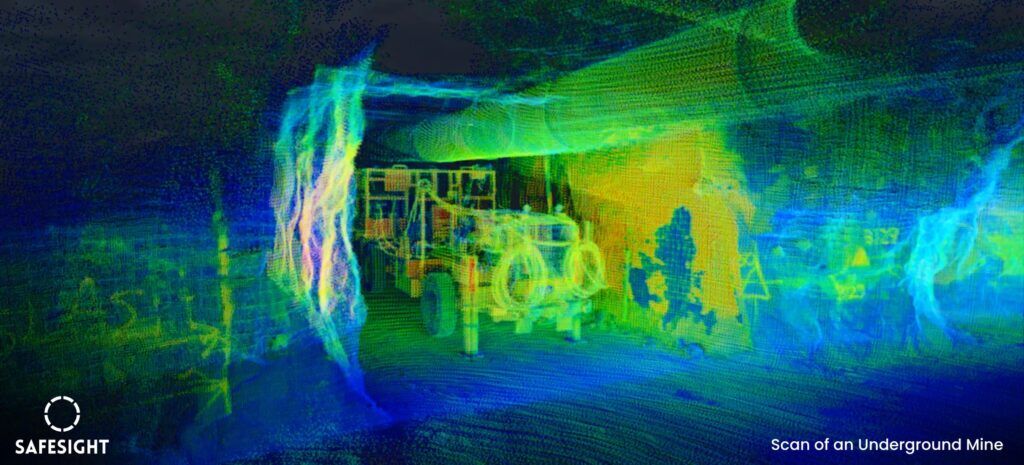
The Demand for LiDAR Scanners
Within the broader category of scanning technology, LiDAR (Light Detection and Ranging) has emerged as the leader. The demand for LiDAR scanner systems has grown rapidly, with projections showing strong momentum into 2025 and beyond. This growth is being driven by several converging trends:
Accuracy and Resolution
LiDAR scanners provide millimetre-level precision, which is critical for mine planning and hazard detection. Traditional methods often fall short when it comes to capturing the full complexity of underground spaces.
Speed of Data Collection
As mines push for faster turnaround times, LiDAR scanners have proven their ability to gather comprehensive data in minutes rather than hours or days.
Automation and Remote Capabilities
The demand for LiDAR scanner systems aligns with the mining sector’s broader shift toward automation. Remote and in-motion scanning reduces the need for on-site surveyors, allowing teams to collect data safely and consistently.
Integration with Digital Twins
LiDAR data feeds seamlessly into digital twin platforms, enabling mining companies to create 3D replicas of assets and environments. This capability enhances predictive maintenance, planning, and real-time monitoring.
Market Trends for 2025 and Beyond
Looking ahead, several key market trends are shaping how the demand for LiDAR scanner technology will evolve in mining:
Broader Adoption Across Mid-Tier Mines: Once considered cutting-edge and primarily adopted by top-tier mining companies, LiDAR scanners are becoming more accessible. In 2025, mid-tier operators are expected to expand their use of LiDAR as costs stabilize and ROI becomes clearer.
Integration with AI and Machine Learning: LiDAR data will increasingly be analyzed by artificial intelligence systems, creating actionable insights faster than ever before. This will drive a new wave of operational decision-making based on predictive modelling.
Cross-Industry Influence:As LiDAR adoption grows in sectors like infrastructure, energy, and civil engineering, the mining industry will benefit from technological advances and falling equipment costs.
Focus on Mobility and Flexibility:Mining operations demand solutions that can adapt quickly to changing conditions. In 2025, the market will prioritize scanners that can be deployed rapidly, used in motion, and integrated into existing workflows with minimal disruption.
SafeScanner: The Leading In-Motion LiDAR for Mining
While the market continues to expand, not all LiDAR solutions are created equal. Mining requires scanners built to withstand challenging environments while delivering speed, accuracy, and safety. This is where SafeScanner stands out.
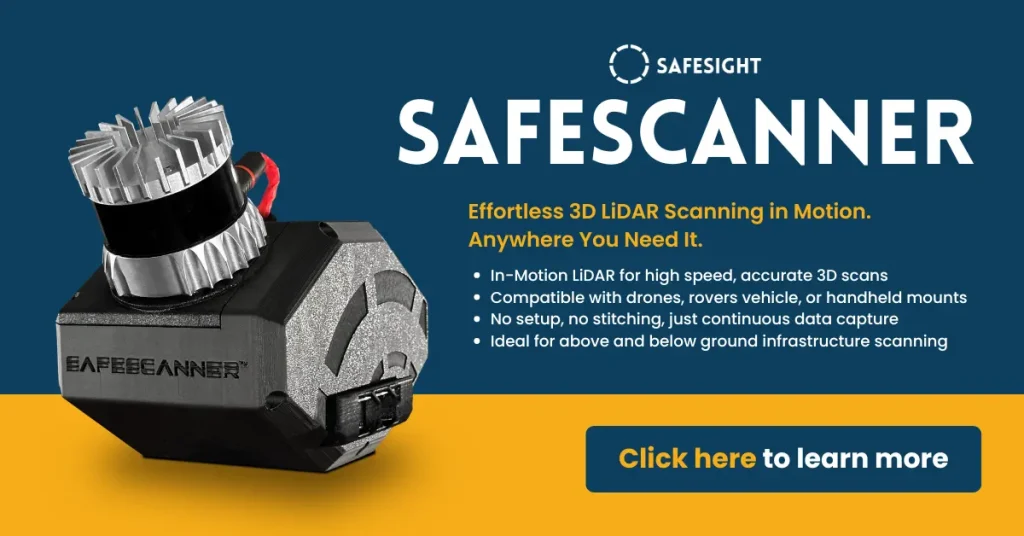
SafeScanner is designed specifically for mine mapping and surveying, offering unmatched in-motion scanning capabilities. Mounted on vehicles, it enables operators to capture high-resolution 3D models of underground environments without halting production. This means mines can generate actionable data while maintaining continuous operations, reducing downtime, and improving overall efficiency.
By combining speed, precision, and safety, SafeScanner addresses the core needs driving the demand for LiDAR scanner systems in the mining industry. It equips mining companies not only to keep up with 2025 market trends but also to stay ahead of them.
The Future is Clearer with SafeScanner
The mining industry is entering a new era where data is as valuable as ore. As the demand for LiDAR scanner technology continues to rise, companies that invest in advanced scanning solutions will gain a critical advantage in safety, productivity, and sustainability.
SafeScanner is the solution for mining companies ready to embrace the future of surveying and mapping. To see how SafeScanner can transform your operations, visit our SafeScanner page.
Watch theSafeScanner in Action