As Fire Chiefs, we are constantly looking for tools that enhance our department’s operational efficiency, firefighter safety, and situational awareness. Drones are quickly becoming indispensable assets in emergency response—but choosing the right drone for firefighting isn’t as simple as walking into a store and picking one off the shelf.
With hundreds of models available—ranging from recreational quadcopters to rugged industrial units—it’s vital to understand exactly what features, certifications, and capabilities your fire department needs before making an investment.
This guide walks you through everything you need to consider to make an informed, future-proof drone purchase for your fire department.
Step 1: Identify Your Department’s Use Cases
Before looking at drone specs, start by answering this: What problems are we trying to solve with a drone?
Common fire department use cases include:
- Initial size-up and aerial reconnaissance
- Thermal imaging for hidden fire detection
- Search and rescue in large or remote areas
- Hazmat incident assessment from a safe distance
- Wildland fire progression tracking
- Post-incident documentation and mapping
Clearly defining your operational needs will guide your decision on drone type, camera capabilities, flight endurance, and more.
Step 2: Choose the Right Type of Drone
There are three general categories of drones suitable for fire service:
| Drone Type | Best For | Limitations |
|---|---|---|
| Quadcopters | Structure fires, urban incidents, inspections | Shorter flight time (20–40 min) |
| Fixed-wing drones | Wildland fires, long-distance SAR missions | Requires runway or catapult launch |
| Hybrid VTOL | Extended range with vertical takeoff | More complex and expensive |
For most departments, quadcopters offer the best balance of versatility, portability, and ease of use.
Step 3: Focus on Essential Features for Firefighting
When evaluating drone models, prioritize the following fire-relevant features:
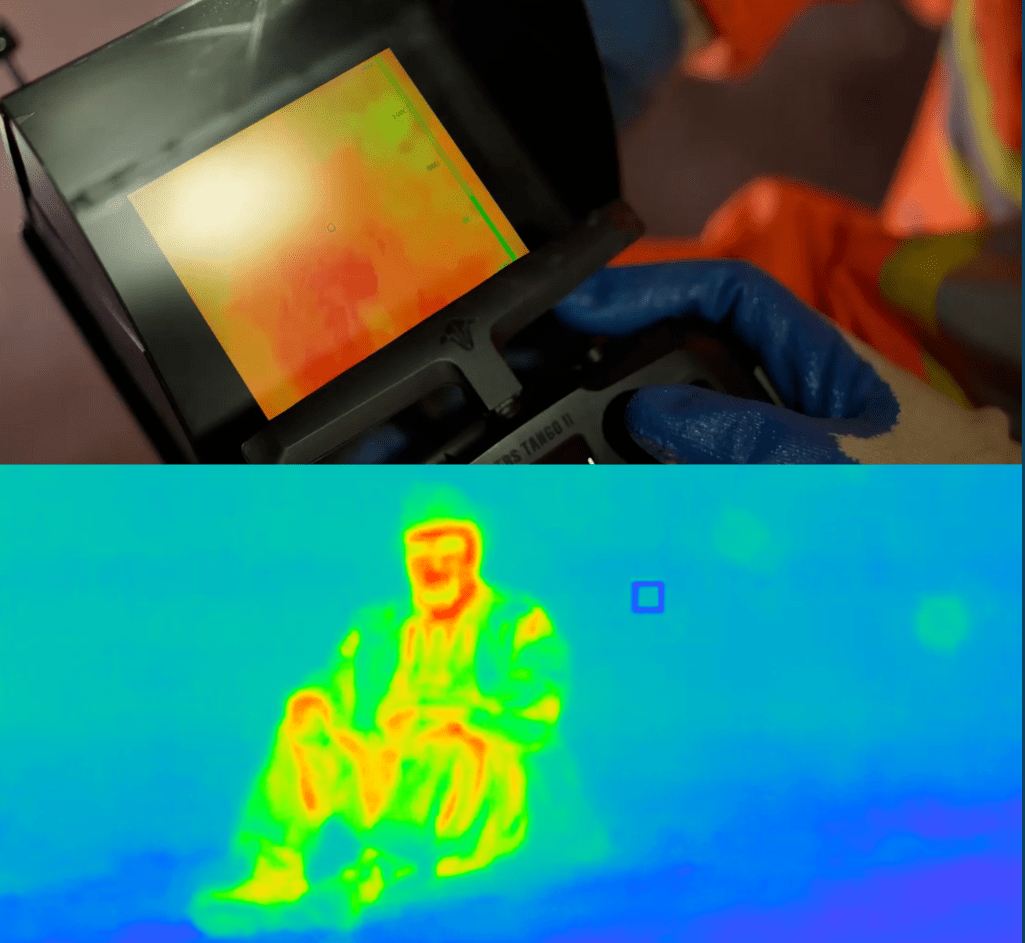
1. Thermal + Optical Cameras
- Look for dual-sensor payloads that offer both visual and infrared imaging.
- Ensure the thermal camera is radiometric (provides temperature readings).
- Use for detecting hotspots, locating people in smoke, and monitoring fire spread.
2. Live Video Streaming
- Must provide real-time video to command staff in the field or EOC.
- Preferably with HD quality, low latency, and encrypted transmission.
3. GPS and Autonomous Flight
- Ability to set GPS waypoints for mapping or perimeter surveillance.
- Return-to-home safety feature in case of signal loss or low battery.
4. Weather Resistance
- Must be rated to fly in wind, smoke, light rain, and extreme heat.
- Look for IP ratings (Ingress Protection) like IP43 or higher.
5. Long Battery Life & Hot-Swap Batteries
- Minimum 25–30 minutes flight time per battery.
- Hot-swappable battery design allows for fast turnaround during active scenes.
6. Night Vision / Low-Light Performance
- Ensure the optical sensor can perform in dusk, dawn, and nighttime conditions.
Step 4: Understand Software & Data Integration
Your drone’s hardware is only part of the picture. The software ecosystem it works with is equally important:
- Mapping software (for orthomosaics, 2D/3D reconstructions)
- Command center integration (streaming to mobile command posts or EOCs)
- Data export formats (video, telemetry, thermal imagery)
- Compatibility with GIS systems (ArcGIS, WebEOC, Veoci)
Some platforms offer incident-specific overlays, geofencing tools, or direct integration with ICS forms and resource tracking dashboards.
Step 5: Ensure Regulatory Compliance
Depending on your country, your drone operations will need to follow specific aviation regulations:
In Canada:
- Advanced RPAS certification required for urban operations
- Registration of the drone with Transport Canada
- Visual Observer required for many scenarios
In the U.S.:
- FAA Part 107 license required for all commercial/public safety use
- Night flying waiver if operating after sunset
- Remote ID compliance
Ensure your pilots are certified and your department has policies for airspace coordination, data retention, and public privacy.
Step 6: Evaluate Vendor Support, Training & Warranty
Firefighting is high-stakes. Choose vendors who:
- Provide hands-on training for pilots and command staff
- Offer 24/7 technical support
- Deliver firmware updates for security and reliability
- Provide multi-year warranties and fast replacement services
Ask for references from other fire departments using their equipment.
Step 7: Budgeting for the Full Program
Don’t just budget for the drone itself. Consider:
| Cost Area | Estimated Range (CAD) |
|---|---|
| Drone + Payload | $10,000 – $40,000 |
| Spare Batteries (4–6) | $1,000 – $2,500 |
| Training & Certification | $1,500 – $3,000 |
| Live Streaming Hardware | $1,000 – $5,000 |
| Carrying Case / Charging Station | $500 – $2,000 |
| Software Licenses | $500 – $3,000 per year |
Start small if needed, then scale with operational feedback.
Step 8: Run a Pilot Program Before Full Deployment
Implement a 90-day pilot program to test your chosen drone in real-world scenarios. Evaluate:
- Deployment time
- Communication with command post
- Flight reliability under stress
- Effectiveness in different call types
Document each mission and adjust SOPs and training as needed before expanding department-wide.
Contact SafeSight about Drone Pilot Training
Step 9: Prepare Policies and Public Messaging
To ensure smooth integration and public trust:
- Draft SOPs covering flight safety, privacy, data handling, and mutual aid use
- Collaborate with your municipality’s legal team
- Educate the public about the drone’s lifesaving role—not surveillance
Final Thoughts: Buy for the Mission, Not the Specs
In firefighting, tools either enhance your response or get in the way. Buying a drone should be mission-driven, not feature-driven. Identify your department’s operational gaps, choose a platform that fits your strategy, and build a drone program that supports your crew in the field—day or night.